Research
Job Market Paper
-
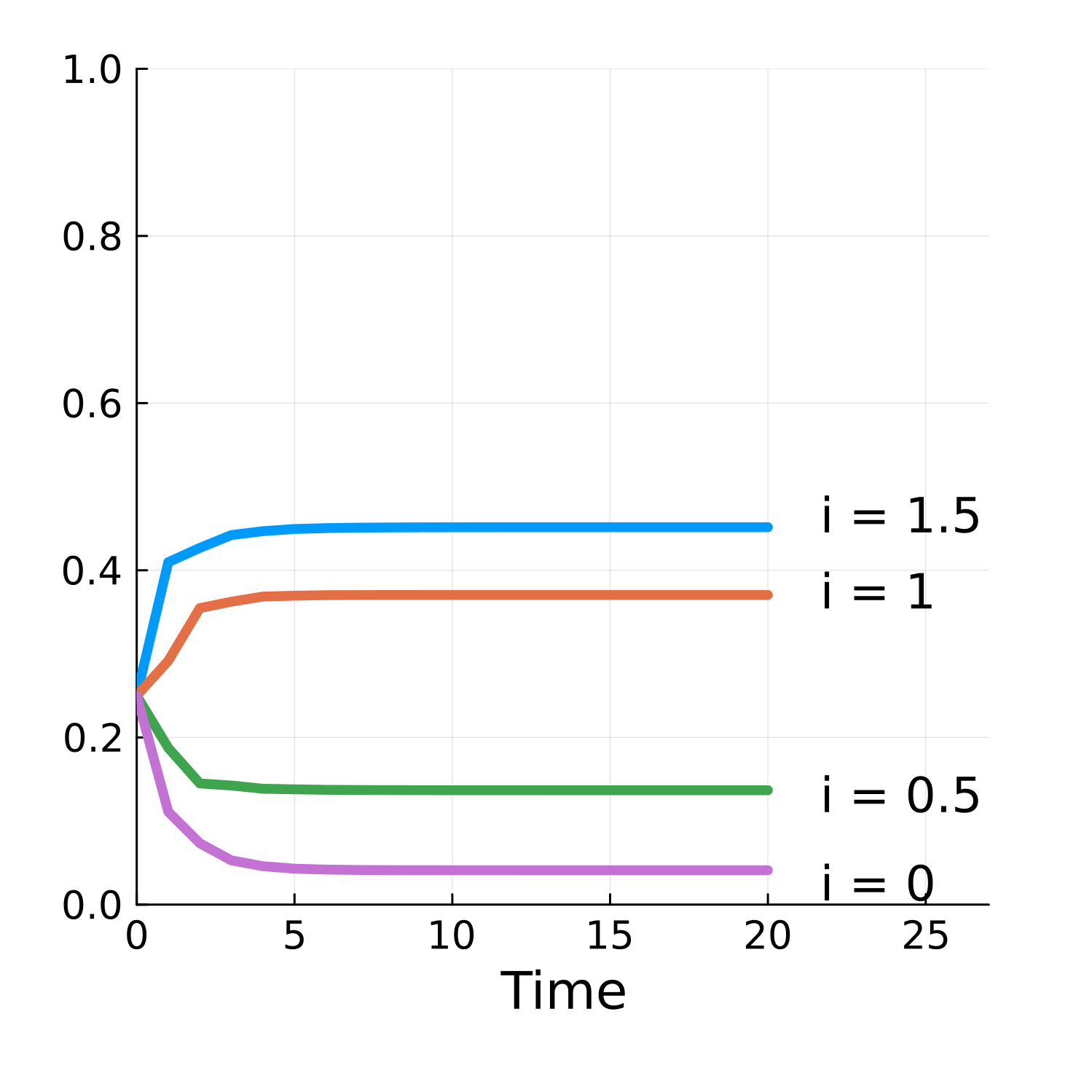
Explaining the Fertility Crunch: The Roles of Intergenerational Income Mobility and Shifting Preferences
Children inherit fertility ideals from their parents and from society, then revise them by comparing their own economic prospects with their parents'. When upward mobility stalls, this revision offsets the demographic advantage of high-fertility families and holds aggregate fertility at a stable, ultra-low equilibrium.
Abstract
Assuming that preference on fertility is transmitted from earlier generation to the next, the high fertility preference group is expected to eventually dominate creating a homogeneous high preference society as the group is more likely to have more kids leading to faster growth in population than other preference group. However, a significant body of surveys reveals pronounced within-country heterogeneity in fertility ideals and many post-war societies exhibit persistently lowering pattern in fertility. In this paper, I propose a fertility model that children first acquire fertility ideals through cultural transmission, either from parents (vertical) or from the broader adult population (oblique). They then adjust these ideals after comparing their expected income with their parents'. Upward mobility can raise preferences, while downward mobility lowers them. This mobility shock offsets the evolutionary advantage of high-fertility groups, preserving preference diversity and driving the aggregate fertility rate to a stable ultra-low equilibrium. The framework highlights intergenerational mobility as a central, yet overlooked, determinant of fertility dynamics and offers a critical perspective on projections that anticipate a rebound in fertility without accounting for these mechanisms.
Working Papers
-
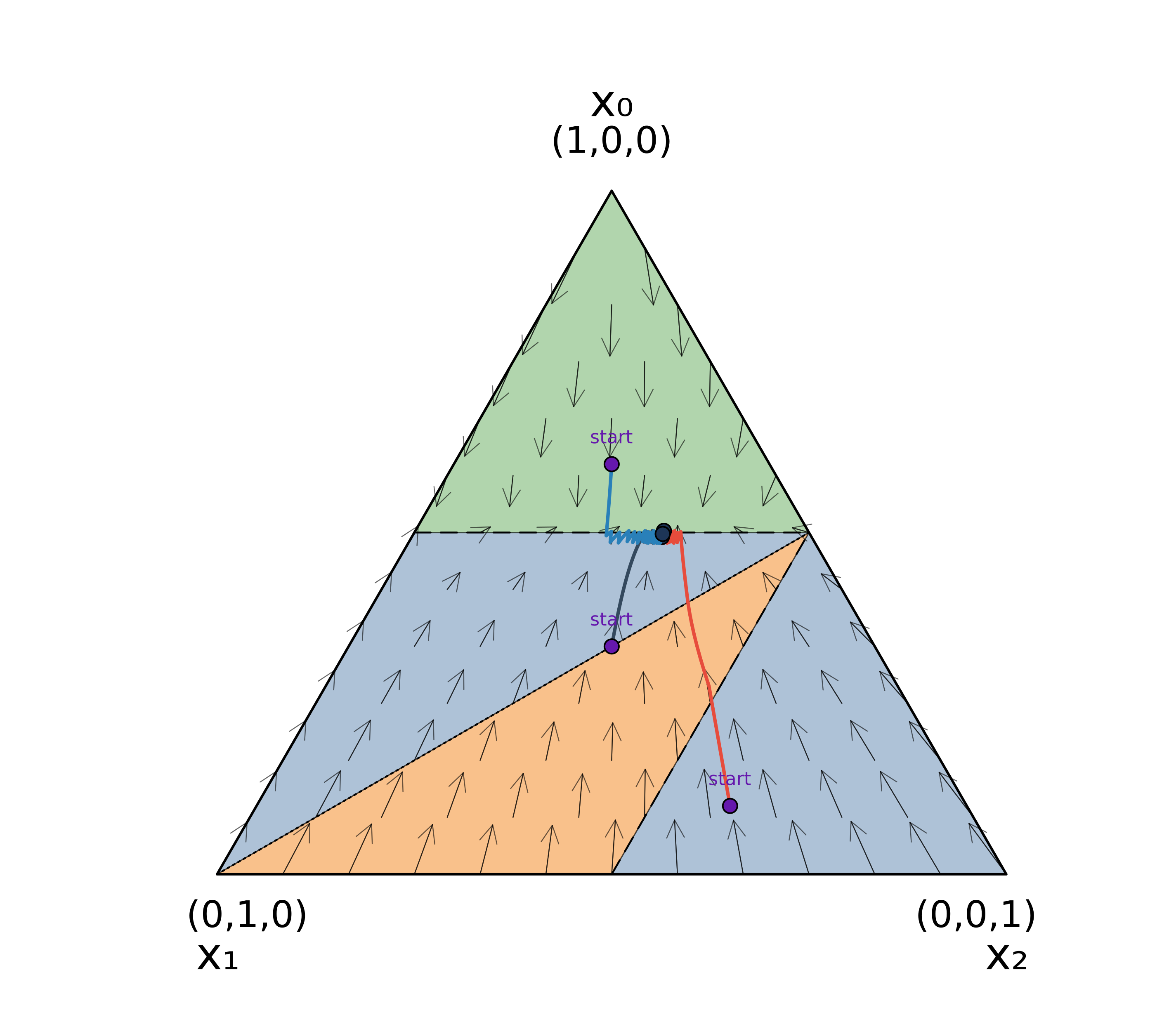
Pension Politics and the Evolution of Fertility Preferences: A Political Economy of Fertility Decline
Abstract
This paper develops a political economy model linking pension politics to the evolution of fertility preferences. Individuals vote over taxes imposed on the next generation to finance their own pensions. Voters with low fertility preferences restrain taxation: although they have few descendants who bear the tax burden, high taxes reduce fertility among those who value children and thereby shrink the future pension base. Fiscal policy, in turn, shapes the evolution of fertility preferences through social learning. Young agents observe others’ apparent economic success but not the internal value they attach to having children. Because childless adults avoid child-rearing costs, they appear economically more successful, encouraging the spread of low fertility preferences. Higher taxes reduce family size and these visible costs, narrowing the apparent economic gap between parents and the childless and slowing that spread. Pension politics therefore feeds back into the long-run evolution of fertility preferences and fertility decline.
Work in Progress
-
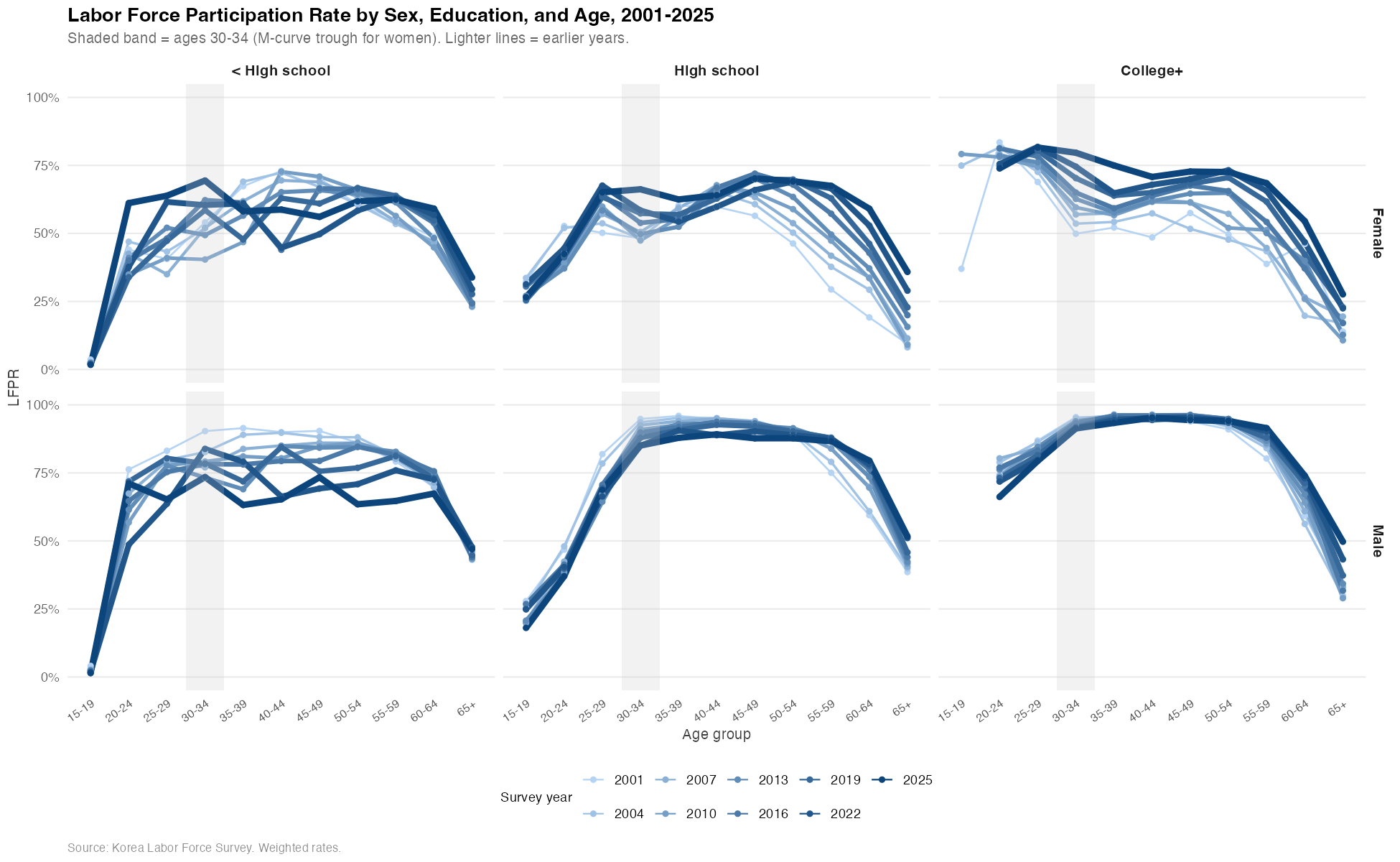
Working title: A Lifecycle Model of Women's Labor Supply, Marriage, and Fertility in South Korea